Built
~1453–1478Built after the Conquest
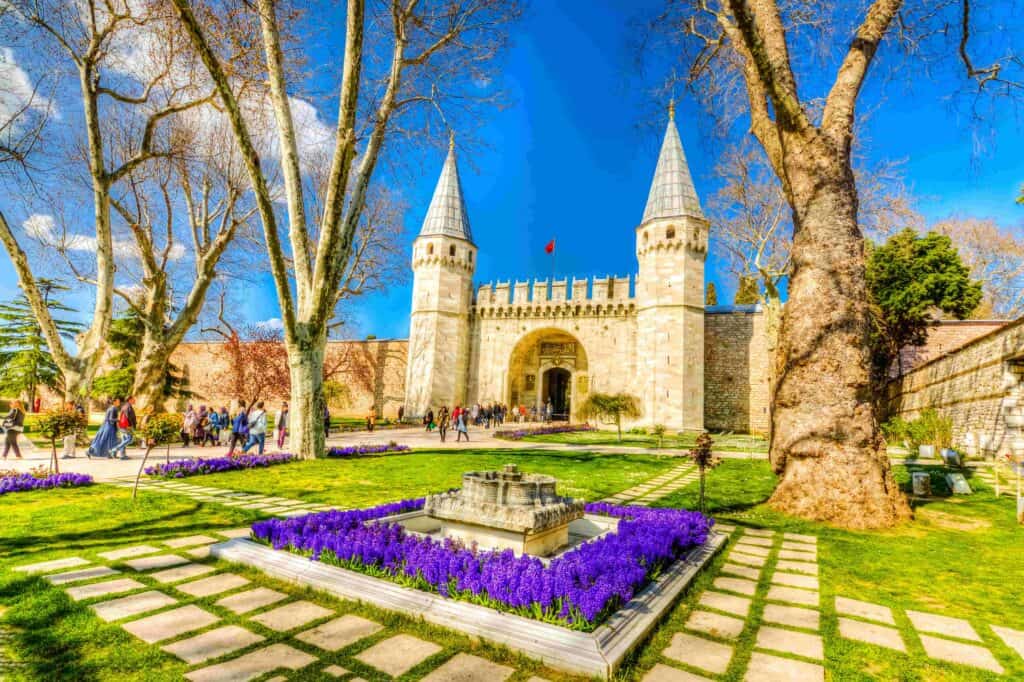
Read the history and most distinctive features of the palace that Sultan Mehmed the Conqueror founded after the Conquest, that governed the Ottomans for almost four centuries and that became a museum in 1924 — all in one place.
Independent guide — this is not the official website ⓘ
A hand-picked set of experiences related to this page, bookable online.
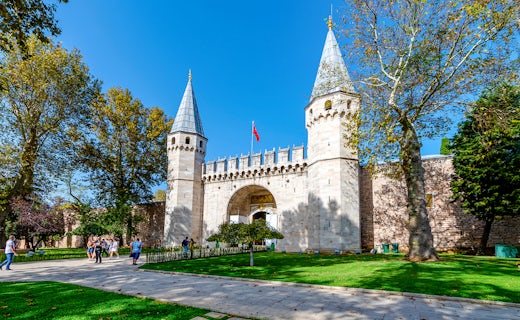
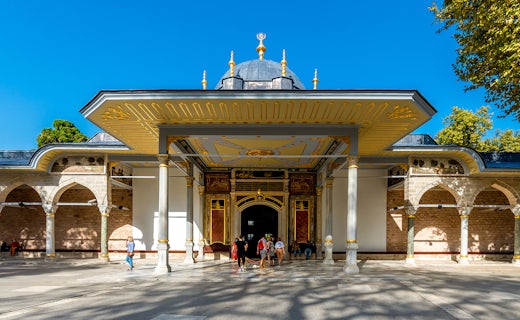
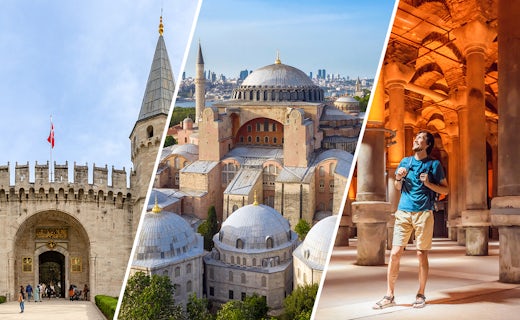
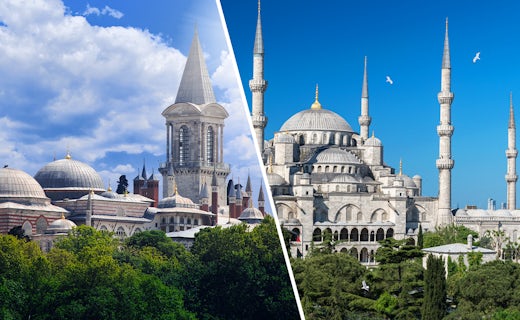
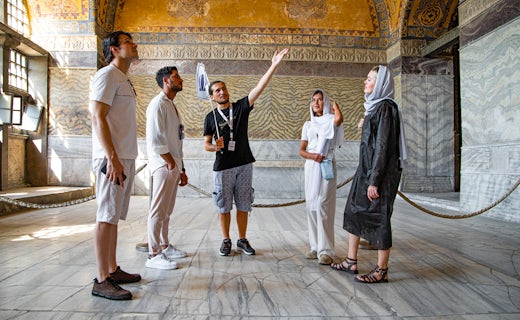
The story of Topkapi Palace begins with the conquest of Istanbul in 1453. After taking the capital of Byzantium, the young sultan Mehmed the Conqueror decided to move the heart of his empire here and had his palace built on the city's most strategic hill, on the promontory where the Golden Horn and the Bosphorus meet the Sea of Marmara. The history of Topkapi Palace is thus interwoven with this very decision — with the rebirth of a capital.
For almost four centuries the palace was not only the home of the sultans but also the centre from which the state was governed. More than 25 Ottoman sultans lived here, conducted affairs of state from here and received ambassadors here. In this sense Topkapi is not a residence but a city of government and dynasty spread out into the open air.
On this page we explain step by step when the palace was built, who had it built, how it grew over the centuries and how it was turned into a museum in 1924. From its architectural features to its most striking treasures, from its timeline to its UNESCO context, we've gathered the whole history of Topkapi Palace on a single page.
| Topic | Detail |
|---|---|
| When was it built? | Begun ~1453, largely completed ~1478 |
| Who built it? | Sultan Mehmed the Conqueror (Mehmed II) |
| Original name | Saray-ı Cedîd-i Âmire (the New Palace) |
| How long did it remain a palace? | ~380 years, more than 25 sultans |
| When did the court move? | To Dolmabahçe Palace in 1856 |
| Conversion to a museum | 3 April 1924, by order of Atatürk |
Historical data is based on official millisaraylar.gov.tr data and accepted sources.
The construction of Topkapi Palace began in earnest shortly after the Conquest, around 1459–1460, and the main structures were largely completed around 1478. So the short answer to "When was Topkapi Palace built?" is: in the second half of the 15th century, during the reign of Sultan Mehmed the Conqueror.
But giving a single completion date would actually be misleading. Because Topkapi is not a building that was designed and "finished" all at once. Its core was established in the era of the Conqueror; later sultans added new kiosks, apartments, kitchens and libraries as needs arose. For this reason the construction of the palace should be thought of as an uninterrupted process spread across roughly four centuries.
Before the Conqueror, Ottoman sultans resided in the Old Palace (Saray-ı Atik), on the site of today's Istanbul University. With the building of the new palace the dynasty gradually moved here, and the Old Palace turned into a residence largely reserved for the women of the dynasty.
The palace's present name, "Topkapi", is in fact one that became widespread much later. In the Ottoman period its official name was Saray-ı Cedîd-i Âmire, meaning "the New Palace"; for the Conqueror's first palace in Beyazıt was known as the Old Palace.
The name "Topkapi" came from a gate on the shore side where cannon (top) were fired (Topkapısı) and from a summer kiosk there. Over time this name was adopted to cover the whole complex. So the name we use today is inherited less from the palace's magnificent inner world than from its outer gate facing the sea.
For about 380 years Topkapi Palace was both the dynastic residence and the administrative centre of the Ottoman Empire. Over this period, beginning with Sultan Mehmed the Conqueror, more than 25 sultans lived here and governed the state from here.
The heart of the palace's administrative function was the Imperial Council (Divan-ı Hümayun) in the second court. The Council, the highest decision-making body of the state, met here; decisions on taxation, war, peace and justice were taken under this roof. The sultan could secretly watch the meetings through a latticed window beneath the Tower of Justice. So Topkapi served, in modern terms, as palace and government office, as treasury and as supreme court, all at once.
We've explained this multi-layered function courtyard by courtyard on the palace's sections page: there you can find what each courtyard was used for and the hierarchy around which the sultan's daily life was structured.
The best way to understand the features of Topkapi Palace is to compare it with European palaces. Whereas Versailles and most similar European palaces are built around a single colossal building and a symmetrical façade, Topkapi follows the opposite logic, consisting of kiosks scattered among courtyards and gardens that open into one another.
My personal view: those visiting Topkapi for the first time can be surprised when they expect "a single magnificent hall". The real beauty emerges in the rhythm that unfolds as you walk among the gardens, passing from one kiosk to the next — the palace is a structure that opens up as you walk through it.
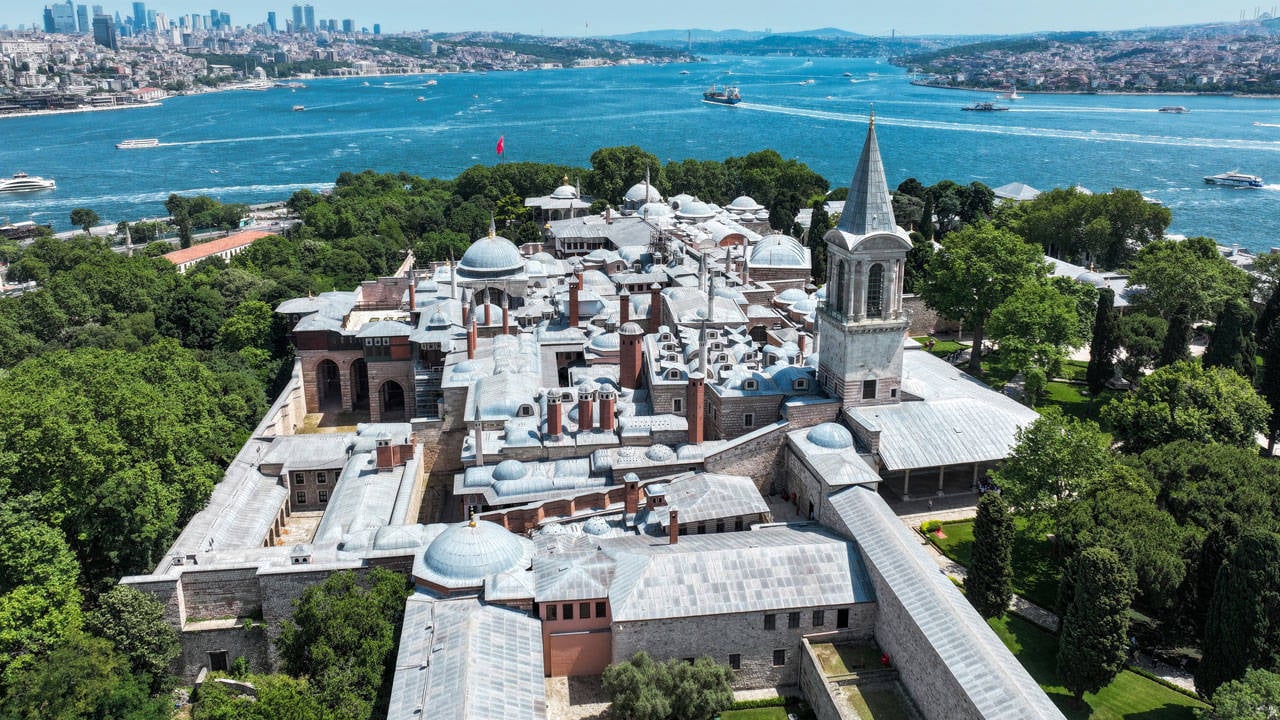
When asked about the most distinctive feature of Topkapi Palace, the first thing most experts point to is the unique combination of the place itself with its collection. Four elements make the palace unique:
The place where you can see these treasures and the tile-clad intimate world up close is the Harem; be sure to set time aside for it during your visit.
By the 19th century Topkapi had begun to fall behind a changing world. The traditional order built on courtyards and kiosks was not well suited to European-style receptions, balls and modern affairs of state.
In 1856 Sultan Abdülmecid moved the dynasty and the administration to the European-looking Dolmabahçe Palace he had built on the shore of the Bosphorus. With this, Topkapi formally gave up its role as the main palace of almost four centuries.
Yet Topkapi was not abandoned entirely. The Sacred Relics and the Treasury remained here; the palace kept its spiritual and symbolic importance. Sultans continued to come here for certain religious ceremonies. So 1856 was not an end but the beginning of the palace's transformation from a residence into a place of treasure and memory.
Shortly after the proclamation of the Republic, on 3 April 1924, Topkapi Palace was turned into a museum by order of Mustafa Kemal Atatürk. Thus this closed world, into which for centuries only the dynasty and elite officials could enter, was opened to the public for the first time.
This decision was a turning point for the preservation and display of the palace's treasures. The priceless pieces in the Treasury, the Sacred Relics, imperial kaftans, manuscripts and tiles now became collections that everyone could see.
Today the Topkapi Palace Museum is one of the most visited museums in Turkey and is administered under the National Palaces administration. You can find practical information on admission, tickets and current hours on our ticket prices page.
| Year | Event |
|---|---|
| 1453 | The conquest of Istanbul; Mehmed the Conqueror moves the capital |
| ~1459–1478 | The New Palace (Saray-ı Cedîd) is built and largely completed |
| 16th–17th c. | The Harem expands, kiosks and the Treasury are added; the palace enjoys its golden age |
| 1639 | The Baghdad and Revan Kiosks are built during the reign of Murad IV |
| 1719 | The Library of Ahmed III is added to the third courtyard |
| 1856 | The court moves to Dolmabahçe; Topkapi ceases to be the main residence |
| 3 April 1924 | Converted into a museum by order of Atatürk |
| 1985 | The Historic Areas of Istanbul are inscribed on the UNESCO World Heritage List |
Some dates reflect period repairs and additions; the palace is a continually evolving structure.
Tip for history lovers: as you tour the palace, follow the courtyards in order, from outside to inside. This sequence is no coincidence; you trace exactly the protocol hierarchy that ambassadors and officials passed through as they approached the sultan over the centuries. By the time you reach the fourth courtyard, you've actually arrived at the most intimate corner of an empire.
One of the most interesting features of Topkapi is that it was never "completed". Each sultan added new layers to the palace according to the needs and taste of his own era; that is why the structure you tour today is the joint work not of a single age but of four centuries.
During the reign of Suleiman the Magnificent, in the 16th century, the palace enjoyed its golden age. As the empire's wealth grew, the Treasury filled, the Harem expanded, and the palace was made magnificent by structures the architect Sinan also had a hand in. Much of the Harem's complex layout today took shape in these centuries.
In the 17th century Murad IV had two kiosks bearing those names built in the fourth courtyard to celebrate the victories of the Baghdad and Revan campaigns. With their Iznik tiles and mother-of-pearl inlays, these kiosks are counted among the high points of the palace's classical Ottoman aesthetic. In the 18th century Ahmed III added his elegant library to the third courtyard.
This uninterrupted process of addition makes Topkapi almost an Ottoman history cast in stone. As you pass from one courtyard to the next, you are actually travelling between the centuries.
The most precious heritage in the history of Topkapi Palace is, without doubt, kept in the Treasury and the chamber of the Sacred Relics. These two sections show that the palace was not only a residence but also a repository of an empire's wealth and spirituality.
The Treasury in the third courtyard is housed in the building also known as the Conqueror's Kiosk. The 86-carat Spoonmaker's Diamond and the emerald-studded Topkapi Dagger displayed here are among the most famous jewels in the world. Imperial thrones, jewelled kaftans and gold-embroidered objects are tangible proof of Ottoman splendour.
Even when the court moved in 1856, the Sacred Relics were left here; this allowed Topkapi to continue in its role as a spiritual centre. These relics, priceless to the Islamic world, also explain why the palace's historical importance was crowned with a museum in 1924.
You can find a detailed breakdown of these treasures and of what is located in which courtyard on our sections page.
To understand the history of Topkapi Palace, it's worth comparing it once more with its contemporary European palaces. For its most distinctive feature often lies not in what it contains but in how it was designed.
Versailles and similar European palaces proclaim absolute power through a single colossal façade, endless symmetry and a showy central hall. Topkapi does exactly the opposite: it hides its power and veils it with privacy. The courtyards narrowing as you go in tell, in architectural language, how difficult and privileged it was to approach the sultan.
This "inward-turning" structure is a continuation of Turkish-Islamic garden culture and the nomadic tent tradition. The palace is built with kiosks scattered among gardens, intertwined with nature; it is not a single building but a complex, a living space.
So as you tour Topkapi, set aside the European image that comes to mind with the word "palace". This is an organically grown city that was at once the home, the office and the temple of a ruler.
Topkapi Palace is protected not on its own but as part of the whole within which it lies. The palace is included in the Historic Areas of Istanbul, inscribed on the UNESCO World Heritage List in 1985. This area covers the Historic Peninsula in Sultanahmet — that is, Hagia Sophia, the Blue Mosque, the Basilica Cistern and the area within the old walls.
This context is important: Topkapi should be thought of not just as a museum to visit but as the crown at the centre of thousands of years of layers around it. This hill, stretching from Byzantium to the Ottomans, holds a density of history that comes together nowhere else in the world.
When planning your visit, I'd suggest considering the palace not on its own but together with its neighbouring structures. Its position at the centre of the Historic Peninsula makes Topkapi not just an Ottoman palace but a hill that governed the capital of three empires. Taking a look at our ticket and Harem pages before touring the palace will help you set your visit within this historical context.
Construction of Topkapi Palace began after the Conquest, around 1459–1460, and the main structures were largely completed around 1478. However, the palace kept growing over the following centuries with added kiosks and apartments, so there is no single completion date.
The palace was built by Sultan Mehmed the Conqueror (Mehmed II), who conquered Istanbul in 1453. Its first official name was Saray-ı Cedîd-i Âmire, meaning "the New Palace".
The palace served the Ottoman sultans as both residence and administrative centre for about 380 years. During this time more than 25 sultans lived here. In 1856 the dynasty moved to Dolmabahçe Palace.
Topkapi Palace was turned into a museum on 3 April 1924 by order of Mustafa Kemal Atatürk and opened to the public for the first time. It has served as a museum ever since.
Its most distinctive feature is the unique combination of place and collection: the Iznik tiles, the 86-carat Spoonmaker's Diamond and the Topkapi Dagger in the Treasury, the Sacred Relics, and the unique location overlooking the Golden Horn and the Bosphorus. Architecturally, its organic structure of courtyards and kiosks rather than a single building sets it apart from European palaces.
Yes. The palace is included in the "Historic Areas of Istanbul", inscribed on the UNESCO World Heritage List in 1985. This area covers the Historic Peninsula in Sultanahmet — Hagia Sophia, the Blue Mosque and their surroundings.
Book your skip-the-line entry ticket online and save hours of queuing.